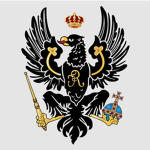
Kingdom of Prussia #3249536
OtherENhistoryNapoleonic eraPrussia
Description
'𝑺𝒖𝒖𝒎 𝑪𝒖𝒊𝒒𝒖𝒆' Year : 1803 - 1815 (Napoleonic Era) The Kingdom of Prussia was a German kingdom that constituted the state of Prussia and included parts of present-day Germany, Poland, Russia, Lithuania, Denmark, Belgium and the Czech Republic. Although it took its name from the region called Prussia, it was based in the Margraviate of Brandenburg, where its capital was Berlin. The Kingdom of Prussia was founded in 1701, in which the coronation of Friedrich I of Prussia occurred, setting the foundation of the Kingdom. The Kingdom of Prussia has become an industrialized country, with a colonial trading system, and ties to other nations across the globe. The Kingdom of Prussia is ruled by a monarch, The King of Prussia, who has almost complete authority over the state, and controls most of the armed forces. The King of Prussia is also head of the House of Hohenzollern, the ruling house of the Kingdom of Prussia. 𝐸𝑠𝑠𝑒𝑛𝑡𝑖𝑎𝑙 𝐷𝑜𝑐𝑢𝑚𝑒𝑛𝑡𝑠 Coming S
Written by the group; not a statement by this register.
Membership history
Growth
Growth history is still building. We hold one measurement for this entry. A trend needs at least two, taken days apart — so this will fill in on its own rather than being estimated. We do not publish numbers we have not measured.
| Measured (UTC) | Members | Change |
|---|---|---|
| 27 Aug 2026, 15:36 | 5 | first reading |
Ownership
Owned by CaptainRlzzum (@DominiikShultz) as measured.
Groups seen changing owner — the largest ever handed over and the most recent — are on the ownership transfers board.
Experiences
Experiences this group owns, by lifetime visits. Live-player counts are from our last measurement.
Members we’ve seen
CaptainRlzzum (@DominiikShultz) — Konig of Prussia (rank 255)
A sample — only members this register has independently measured, highest rank first. Not the full roster.
Rank structure
Roles and per-rank member counts as Roblox reports them (rank 0 = guest … 255 = owner).
Related groups
Groups whose measured members overlap with this one — a sample from our membership graph.
Open data
Download this group’s measured record — free to reuse with attribution: membership history (CSV) · full record (JSON)
Each file carries its licence and retrieval time inside it, and is generated from the same measurements shown above.