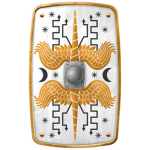
The First Prаetorian Lеgion #6144298
RoleplayENhistorical roleplayroman empiremilitary simulation
Description
THE FIRST PRAETORIAN LEGION LOYAL TO THE EMPEROR AND PEOPLE OF ROME The Legion, originally named "Germanica", was raised originally by Julius Caesar to fight in the Caesarian-Pompeian civil war, fighting first in the battle of Dyrrachium and the bloody struggle at Pharsalus. After Caesar's victory and eventual death, his First Legion would be inherited by Octavian, who later rose to power and became Imperator Augustus. In preparation for campaigns in Germania, loyal Praetorian Guardsmen left the Guard and joined the First Legion in such great numbers that the Emperor saw it fit to call the Legion his own, and thus he christened the name; The First Praetorian Legion. While the Guard serves as the shield of the Julian family, the Praetorian Legion would be personal swords of the Emperor, his highly trained and devoted killers ready to deploy anywhere on the continent and fight many battles for their Emperor.
Written by the group; not a statement by this register.
Membership history
Growth
Growth history is still building. We hold one measurement for this entry. A trend needs at least two, taken days apart — so this will fill in on its own rather than being estimated. We do not publish numbers we have not measured.
| Measured (UTC) | Members | Change |
|---|---|---|
| 10 Aug 2026, 17:32 | 5 | first reading |
Ownership
Owned by Caesar Augustus (@YourDivineAugustus) as measured.
Groups seen changing owner — the largest ever handed over and the most recent — are on the ownership transfers board.
Members we’ve seen
Caesar Augustus (@YourDivineAugustus) — Emperor of Rome (rank 255)
Gaius Maecenas (@Baysights) — Princeps Consiliarius (rank 254)
Ricky (@RickyManzotti) — Consilium Principis (rank 253)
Romulus Caesar (@JackManzotti) — Consilium Principis (rank 253)
A sample — only members this register has independently measured, highest rank first. Not the full roster.
Rank structure
Roles and per-rank member counts as Roblox reports them (rank 0 = guest … 255 = owner).
Related groups
Groups whose measured members overlap with this one — a sample from our membership graph.
Open data
Download this group’s measured record — free to reuse with attribution: membership history (CSV) · full record (JSON)
Each file carries its licence and retrieval time inside it, and is generated from the same measurements shown above.