Element Lutetium #899625517
OtherENsciencechemistryrandom
Description
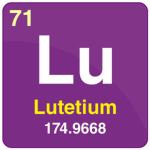
Element lutetium is the element with 71 protons, it is a lanthanide, one of the very last elements in the lanthanide group, its symbol is Lu. It is the densest lanthanide. It is a rare, silvery metal and is the densest and hardest of all the lanthanides. It is more stable in air than most lanthanides but will still slowly react over time. Lutetium is commonly found in and is most used in research but also in scintillators and X-ray phosphors. It was discovered in 1907 and named after Lutetia, the ancient Roman name for Paris, and it usually forms a +3 charge in chemical reactions The most common Lutetium atomic structure is 71 protons, 104 neutrons, and 71 electrons The price of Lutetium is about 650$ per kilogram as of 2020 This ROBLOX group’s (community’s) cover photo is the photograph of a guinea pig ( Cavia porcellus ) it is a rodent
Written by the group; not a statement by this register.
Membership history
Growth
Growth history is still building. We hold one measurement for this entry. A trend needs at least two, taken days apart — so this will fill in on its own rather than being estimated. We do not publish numbers we have not measured.
| Measured (UTC) | Members | Change |
|---|---|---|
| 10 Oct 2026, 00:50 | 4 | first reading |
Ownership
Owned by SG_verybouncygrass (@verybouncygrass) as measured.
Groups seen changing owner — the largest ever handed over and the most recent — are on the ownership transfers board.
Members we’ve seen
SG_verybouncygrass (@verybouncygrass) — Owner (rank 255)
A sample — only members this register has independently measured, highest rank first. Not the full roster.
Rank structure
Roles and per-rank member counts as Roblox reports them (rank 0 = guest … 255 = owner).
Related groups
Groups whose measured members overlap with this one — a sample from our membership graph.
Open data
Download this group’s measured record — free to reuse with attribution: membership history (CSV) · full record (JSON)
Each file carries its licence and retrieval time inside it, and is generated from the same measurements shown above.